Once arriving in Saint Malo, we took the opportunity to walk around the old city to familiarize ourselves a bit. We had 4 full days here with the first day being spent driving to Normandy to see the D-Day landing beaches.
Fair warning, this is a long post with a lot of facts, so read what you please.
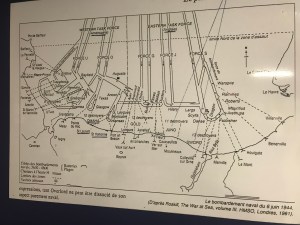 There were five different landing beaches during Operation Overlord, Utah and Omaha beach were fought by the Americans, Gold and Sword where fought by the British, and Juno was fought by the Canadians. Operation Overlord came into fruition on June 6, 1944. However, the idea to invade Normandy had been in place by the British before the US joined WWII.
Originally June 5th was suppose to be the day of the landing, but General Eisenhower decided against it because of weather. When we visited the beach we learned how vital the weather was to the operation, more so than we knew before.
We first went to Omaha beach, the landing most of the world is familiar with. Before going into the museum and starting our journey through history, we grabbed a quick cafe and pastry across the street. We ended up speaking to a British couple who were visiting the beach.
Naturally we talked about D-Day and the war. Mom mentioned her family’s service in the war, and at the end of the conversation they both thanked her for what her family had done. We had only spoken to this couple for maybe 10 minutes, but there was a respectful understanding of what had taken place here 75 years ago.
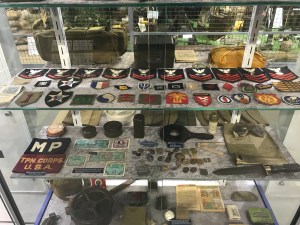 We went into the museum first where we saw an amazing amount of artifacts from the war and the landings. A lot of what I learned was from this museum. While at the museum there were people from all over the world.
Mom and I were reading through the descriptions and looking at artifacts, when I heard another language being spoken. German. There was a group of young men, probably my age, speaking German. Mom and I both noticed and honestly found it a little eerie.
The German gentlemen were as interested as the rest of us and just as respectful. Although this caught me off guard, I think it helped me better realize and remember the Germans lost a lot of people too. I think people forget that the first country Hitler invaded was Germany. For some of the soldiers, they had no choice but to fight and risk their lives.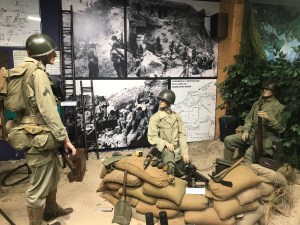
Out of all the landings, Omaha beach had the most casualties. On June 6th, an estimated 4,100 dead, missing or injured at Omaha beach. In comparison, Utah beach had a count of just over 1,000 dead, missing or injured. That was all only the first day. The battle for Normandy lasted about three months, and many more lives were lost during that time.
It was surreal and somber to be standing there on that beach. It was a beautiful day so it was difficult to imagine what it must have been like for those young soldiers. 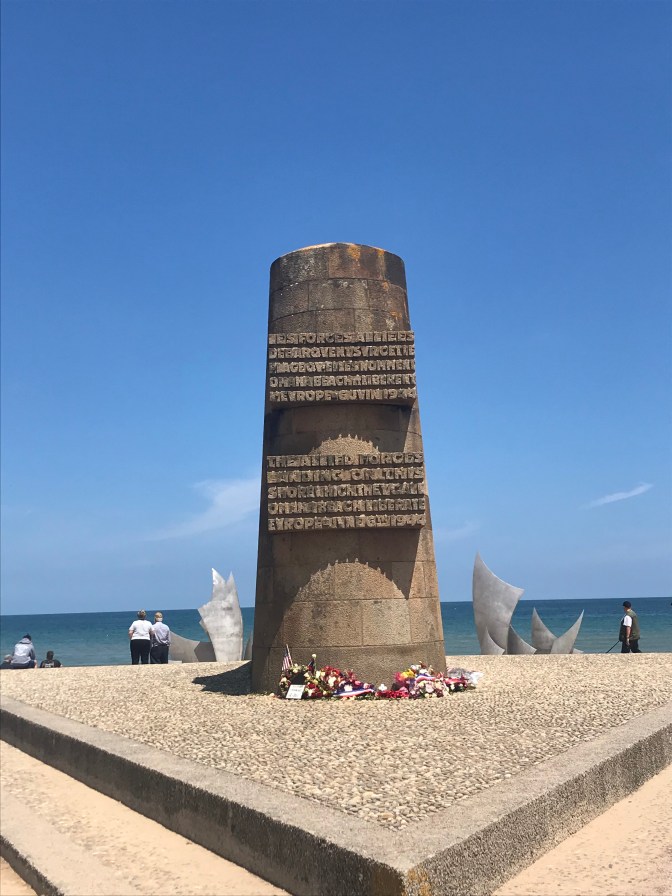 Nowadays the small town and the beach look like any other place, you wouldn’t know how much significance this specific place held if it wasn’t for the museums and monuments.
The actual landing zone of Omaha stretched 5 miles, compared to other beaches that were only a mile or two. Heres a fun fact, once the Americans were able to establish a stronger hold on the area, which took about 3 days and nights, they began to build an artificial harbor. This section of Normandy was to be where the Allies made port. Supplies, trucks, tanks, ammunition, troops, etc were going to be here. I did read that at certain points of the year because of the tide, you can see parts of where the artificial harbor was.
For whatever reason, being at Omaha made me feel very patriotic. Especially for the America we can be. With this feeling I was determined to embrace as much of America as I could. So Mom and I went to lunch and I got a large beer and burger. Perhaps it was the hunger but I hadn’t had a burger that good before.
After a glorious meal we had planned to visit Utah Beach but instead went to Pointe du Hoc first. This was a point of land that stuck out just enough so the Germans could attack both Utah and Omaha Beach. It was also high up on a cliff side so well protected. 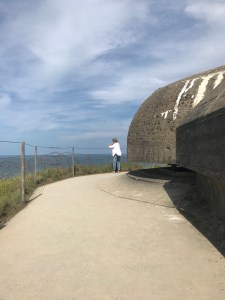 A lesser known part of D-Day is how the US Rangers took down the Germans at Pointe du Hoc. These Rangers were specially trained to land on rocks in rough weather and waves, use rope ladders to climb the cliffs and take down several German bunkers. I suggest googling this more as I only have so much info.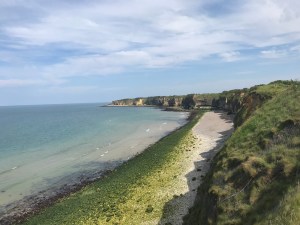
After exploring German bunkers and climbing through all the holes from bombing, we drove to Utah beach. Here is where the US paratroopers landed in the early hours of June 6th. There are monuments everywhere to them and the other divisions at Utah. In this area of France every small village has a story to tell about the Allies, and each has a museum or monument for a person, division or event.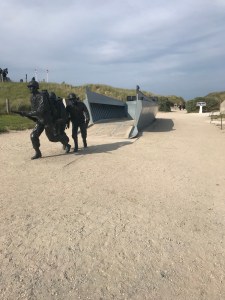
75 years later and there is still a large presence of gratitude and respect for what the Allies did. While driving we saw American flags all over and outside homes. This was probably the only time and place in France I felt proud if people knew I was American.
Before going to Utah Beach, we went to the Normandy American Cemetery. Going in, I knew there was a large amount of soldiers who are buried there, but you don’t really understand the impact until you walk through the countless rows. 9,388 have been laid to rest here, including four American women. 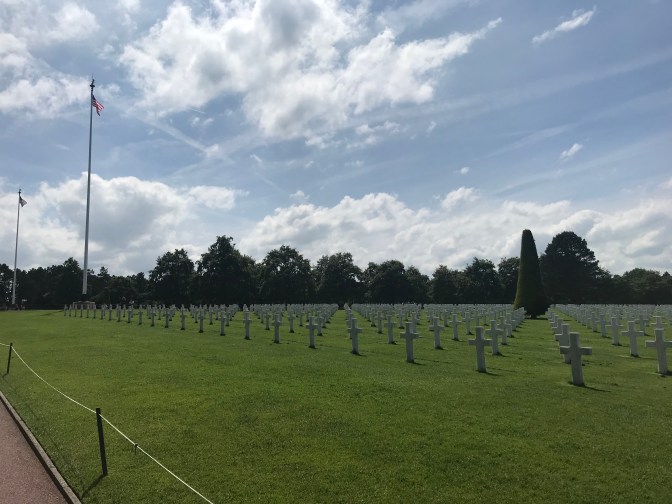 Walking through the rows you can see all the names of these young men and several unknown with the phrase “our fallen comrade” at the top. We walked the entire cemetery and it was impossible not to tear up. Some of these men died where we were standing earlier or in the months following the invasion.
I can’t imagine what living in that time would be like, and I don’t think many people now understand or realize the significance of that generation. Whether you were in the war or a loved one was, that was what life was for those 5 years.
I only knew my Grandfather, who was shot down over Germany and taken as a POW, but his two brothers (my great-uncles who I never met) also fought in the war. Uncle John fought in the Pacific and Uncle Druce died in the Battle of the Bulge. On my father’s side I had a great-uncle who was a part of the the Bloody 100, and flew in the first daylight raids over Berlin.
Learning about the war in this depth gave me such a great appreciation for what all those men did and made me even more proud to be a part of a family that has shown such courage and sacrifice.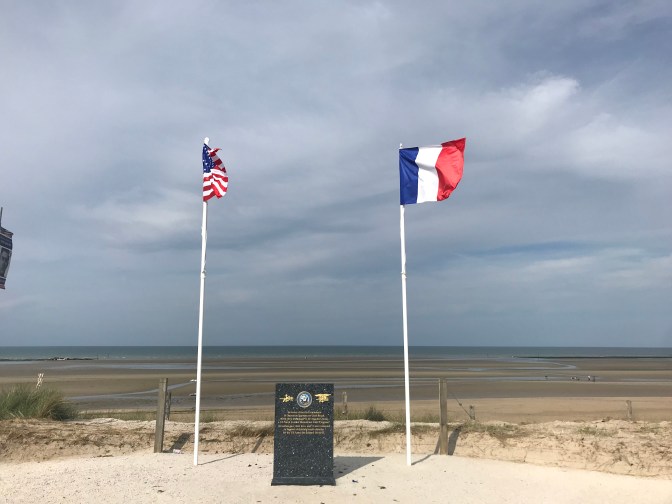
In not so short terms, those were my thoughts on visiting the beaches. I think everyone should go at some point in their lives. Whether you need it or not, you can’t help but gain some perspective on what’s important.
On a more cheery note, the next post will encompass our remaining journey through Brittany and Normandy, visiting some world renowned sights.

 Impossible n’est pas français
Wow, this post was very moving and informative! Thank you for sharing your journey….
Annalisa
LikeLike